PROGRAMME
Saint-Girons V will be held on June 29 – July 3, 2026. There will be a welcome reception on the evening of Monday, 29th June, and the meeting will finish at lunchtime on Friday, 3rd July. Saint-Girons V will expand the Saint-Girons Conference series, by focusing on emerging topics in HPC. Topics to be discussed include:
- numerical linear and multi-linear algebra
- numerical optimization
- numerical solution of PDEs
- AI for scientific computing and HPC for AI
- quantum computing
- approximate computing involving mixed precision
- low precision computation
- randomized algorithms
- low rank approximation
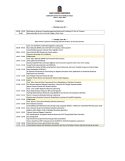
| Monday |
09:00 – 16:00 Workshop on Quantum Computing organized jointly with Fondation N7-Dev in Toulouse 20:00 Welcome buffet at the Le Carré de l’Ange in Saint-Lizier |
| Tuesday |
Main themes: Quantum Computing and Data Science, Artificial Intelligence and Data Science. 09:00 – 09:45 Marc Baboulin (INRIA and Université Paris-Saclay), invited speaker. Toward hybrid quantum-classical linear algebra solvers. 09:45 – 10:15 Simon Martiel (IBM Quantum), invited speaker. Quantum advantage with confidence. 10:15 – 10:45 — coffee break — 10:45 – 11:15 Julien Zylberman (CERFACS). Quantum algorithm for anisotropic diffusion and convection equations with vector norm scaling. 11:15 – 11:30 Youssef Achari Berrada (FAU and CERFACS). Enabling the solution of PDEs using Quantum Neural Networks and novel Trainable Frequency Feature Maps. 11:30 – 11:45 Siwar Badreddine (CERFACS). An Optimal Framework for Constructing Lie-Algebra Generator Pools: Application to Variational Quantum Eigensolvers for Chemistry. 11:45 – 12:00 Jean-Philippe Valois (Université de Lille). Scalable Parallel Branch-and-Bound for Optimal Qubit Mapping. 12:00 – 13:30 — lunch — 13:30 – 14:15 Rick Stevens (Argonne National Laboratory, University of Chicago), keynote speaker. Agentic Science and the DOE Genesis Mission. 14:15 – 14:45 Alena Kopanicakova (Toulouse-INP), invited speaker. Training of Deep Neural Networks Using Multilevel and Domain-Decomposition Methods. 14:45 – 15:15 Sherry Li (Lawrence Berkeley National Laboratory). Domain-aware Gaussian Process for Quantitative Learning in Scientific Computing. 15:15 – 15:45 — coffee break — 15:45 – 16:00 Florin Dobrian (Conviva). Commoditizing Combinatorial Code through Large Language Models: A Maximum Cardinality Matching Case Study. 16:00 – 16:15 Hans Johansen (Lawrence Berkeley National Laboratory). Adaptive Mesh Higher-Order Embedded Boundary Algorithms. 16:15 – 16:30 Takanori Kotama (Nagoya University). HPC-AutoResearch: An Agentic Research System for HPC Through Split-Phase Execution. 16:30 – 16:45 Sixin Zhang (IRIT). Supervised and unsupervised learning for Data assimilation. 17:00 – 18:00 Poster blitz (two-minute presentation per poster) 18:00 – 19:00 Formal poster session with all posters manned for last hour of schedule. Posters will also be kept up all week, and accessible during breaks. |
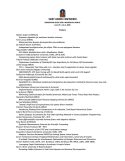
| Wednesday |
Main themes: HPC and Numerical Linear Algebra. 09:00 – 09:45 Jack Dongarra (Innovative Computing Laboratory), keynote speaker. HPC in Transition. 09:45 – 10:00 Julien Langou (University of Colorado Denver). Variations on an algorithm to compute the Q factor after a Householder QR factorization. 10:00 – 10:15 Joost Rommes (NVIDIA). Accelerated linear algebra on AI-era GPUs. 10:15 – 10:30 Alexis Montoison (AMD). Krylov.jl: Empowering Performance and Portability in High-Performance Computing. 10:30 – 10:45 Miroslav Tuma (Charles University). Avoiding the Normal Equations: Row-Splitting ILU Preconditioners for Sparse Least Squares. 10:45 – 11:15 — coffee break — 11:15 – 12:00 Satoshi Matsuoka (Riken Center for Computational Science), keynote speaker. FP8 is All You Need: Debunking Hardware FP64 as the HPC Holy Grail, A Tensor-Memory Equilibrium Model and Implementation Strategy for Ozaki Scheme II on Memory-Bound Workloads in the Post-FP64 Era. 12:00 – 12:15 Michaël Krajecki (GENCI). Presentation to be announced. 12:15 – 12:30 Alfredo Buttari (CNRS-IRIT). The NumPEx French PEPR Research Program. 12:30 – 12:45 Biswajeet Rath (IRIT-INP Toulouse). Analyzing the use of accelerators and mixed precision algorithms on the performance of sparse direct solvers. 12:45 – 13:00 Youssef Aly (Siemens Industry Software Egypt). Design and Implementation of a Reduced and Mixed Precision AMG Solver on GPUs for Large Industrial Circuit Verification Tasks. 13:00 – 13:15 Marc Marot-Lassauzaie (TUM). A mixed- and variable-precision implementation of Discontinuous Galerkin solvers. 13:14 – 14:45 — lunch — Touristic and other activities in the afternoon followed by the gala dinner at the Le Carré de l’Ange in Saint-Lizier |
| Thursday |
Main Themes: Numerical Linear Algebra and Optimization. 09:00 – 09:45 Per-Gunnar Martinsson (The University of Texas at Austin, ILAS Keynote Speaker). Randomized Linear Algebra at Scale: From Sketches to Operators. 09:45 – 10:00 Andy Wathen (Rutherford Appleton Laboratory). Self-adjointness and complex eigenvalues of a real nonsymmetric matrix. 10:00 – 10:15 Philip Knight (University of Strathclyde). A Framework for Fast Balancing. 10:15 – 10:30 David Goudin (Bull). Grand Cru Project: Bull’s strategy to develop expertise and innovation for the synthetic benchmarks. 10:30 – 10:45 Sri Hari Krishna Narayanan (Argonne National Laboratory). diffblas and difflapack: derivatives of BLAS and LAPACK routines. 10:45 – 11:00 Jean-Claude Yakoubsohn (Institut de Mathématiques de Toulouse). Unified Newton’s Method For Matrix Decompositions. 11:00 – 11:30 — coffee break — 11:30 – 12:00 Mike Saunders (Stanford University). MinAres: An Iterative Solver for Symmetric Linear Systems. 12:00 – 12:15 Petr Tichy (Charles University). On Dubrulle’s Block Conjugate Gradient Method. 12:15 – 12:30 Gérard Meurant (retired). Block conjugate gradient methods for least squares problems. 12:30 – 12:45 Bastien Vieublé (Academy of Mathematics and Systems Science). A comparison of the convergence rates of iterative refinement and GMRES. 12:45 – 13:00 Stephen Thomas (Lehigh University). Spectral Measures, Christoffel Functions, and Edge Instability in Krylov Methods. 13:00 – 13:15 Oussama Mouhtal (CERFACS, Montréal Polytechnique). A Spectral Preconditioner for the Conjugate Gradient Method with Iteration Budget. 13:15 – 14:30 — lunch — 14:30 – 15:15 Eulogies to Cleve Moler 15:15 – 15:30 Alex Pothen (Purdue University). A Half Century of Algorithm Design: The Matching Story. 15:30 – 15:45 Bob Lucas (Synopsys). Porting multifrontal computations to GPUs using the OpenMP API. 15:45 – 16:00 Esmond Ng (Lawrence Berkeley National Laboratory). On Solving General Sparse Symmetric Linear Systems. 16:00 – 16:15 Edgar Solomonik (University of Illinois Urbana-Champaign). Sparse LDL, LU, and Inverse Butterfly Factorization via Tree Decomposition. 16:15 – 16:45 — coffee break — 16:45 – 17:30 Sven Leyffer (Argonne National Laboratory), keynote speaker. Unifying nonlinearly constrained optimization. 17:30 – 18:00 Hussam Al Daas (STFC, Rutherford Appleton Laboratory), invited speaker. Extended-Krylov-subspace methods for trust-region and norm-regularization subproblems. 18:00 – 18:15 Jennifer Scott (University of Reading and STFC Rutherford Appleton Laboratory). How Low Can You Go? Mixed-Precision Incomplete Factorization Preconditioners for Sparse Least-Squares Problems. 18:15 – 18:30 Thomas Bake (Charles University). Forward and backward error bounds for a mixed precision preconditioned conjugate gradient algorithm. 18:30 – 18:45 Joanna Bisch (INRIA). Bridging the gap between Adaptive Cross Approximation (ACA) and Rank-Revealing LU: a path for BLAS3 ACA. 18:45 – 19:00 Antoine Jego (Sorbonne Université). Memory Accessor for Mixed Precision GMRES-Based Iterative Refinement. |
| Friday |
Main themes: PDEs, Multigrid, Applications. 09:00 – 09:30 Françoise Tisseur (University of Manchester), invited speaker. Computing Accurate Eigenvalues and Singular Values Using Mixed-Precision Algorithms. 09:30 – 09:45 Brieuc Nicolas (INRIA). Series of tensor contractions with an STF runtime. 09:45 – 10:00 Alycia Lisito (Bull). Exploiting recursive tasks to submit data dependent graph for the LU factorization with partial pivoting. 10:00 – 10:15 Matthieu Robeyns (IRIT). A parallel approach for solving the Green’s function based on the nested-dissection and selected-inverse methods. 10:15 – 10:30 Aydin Buluc (NVIDIA). GPU-Accelerated Direct and Iterative Sparse Linear Solvers. 10:30 – 11:00 — coffee break — 11.00 – 11:15 Petr Vacek (IRIT). Multigrid methods with approximate coarsest-level solvers. 11:15 – 11:30 Jun Cao (Toronto Metropolitan University). An Immersed-Boundary-Based Framework for Study of Tornado Dynamics. 11:30 – 11:45 Sophie Moufawad (American University of Beirut). Direct and Inverse Problem for Gas Diffusion in Polar Firn. 11:45 – 12:00 Suraj Kumar (Inria, Lyon). Communication Lower Bounds and Algorithms for Sketching with Random Dense Matrices. 12:00 – 12:30 Serge Petiton (Paris), invited speaker. Distributed and Parallel Sparse Matrix Computation in the Age of AI. 12:30 – 14:00 — lunch — Post conference activities in the afternoon. People who can stay later can benefit from the renowned hospitality of the people of Saint-Girons as has happened in earlier meetings. (This would be later on Friday and into the weekend.) |
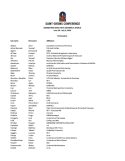
POSTERS
- Nathan Aubert (CERFACS), Quantum algorithm for nonlinear iterative schemes
- Tom Caruso (INRIA), Mixed precision domain decomposition preconditioner
- Sai Aakash Dasari (CERFACS), Extrapolated multigrid solver for elliptic PDEs on non-polygonal domains
- Hugo Dodelin (INRIA), HPC Matrix Multiplication with a MapReduce Model
- Ouassel El Habti (Sorbonne Université, CNRS, LIP6 & EDF), Compressing sparse direct solvers with block low-rank matrices with shared bases
- Takeshi Fukaya (Hokkaido University), Performance Evaluation of CholeskyQR-Type Algorithms for Tall-Skinny QR Factorization
- Julien Gaupp (INRIA), STF++ : Sequential Task Flow with a C++ interface and its application to dense linear algebra
- Shun-ichiro Hayashi (Nagoya University), VIBECODEHPC: HPC Auto-Tuning with CLI-based Multi-agents and Local LLM Support
- Guillaume Helbecque (Université de Lille), PGAS-based parallel branch-and-bound for ultra-scale supercomputers
- Karmijn Hoogveld (CNRS), RandQRCP-ID: a QR-based randomized interpolative decomposition method for fixed-accuracy low-rank approximations
- Davit Khalatyan (American University of Armenia), Implementation of Quantum Atomic Logic Gate in the Cesium D2 Line
- Suraj Kumar (INRIA), Minimizing Communication for Parallel Symmetric Matricized-Tensor Times Khatri-Rao Product
- Alexandre Malhéné (INRIA), When Should GMRES Stop? Practical Stopping Criteria for GMRES
- Samuel Mendoza (INRIA), Toward a high-level of expressiveness for sparse direct methods
- Clément Peaucelle (Airbus & INRIA), Introducing Floating-Point Compression In An Industrial, Task-Based Hierarchical Solver
- Gabriel Berk Pereira (University of Oxford), Krylov Subspace Acceleration for First-Order Splitting Methods in Convex Quadratic Programming
- Jordan Ramassamy (Toulouse INP – IRIT), Auto-differentiable ensemble Kalman filters with adaptive inflation
- Rony Ramia (CERFACS), Quantum Measurement Protocols for Scientific Computing
- Ehouarn Simon (Toulouse INP – IRIT), A kernel extension of the ETKF and a localization strategy
- Alexandre Tabouret (Sorbonne Université, CNRS, LIP6), Adaptive Precision Restarted GMRES for Solving Sparse Linear Systems
- Zoran Tomljanovic (School of Applied Mathematics and Informatics, University of Osijek), A Scalable Framework for Simultaneous Optimization of Damper Placement and Viscosities
- Dimitri Walther (CEA CESTA, Univ. Bordeaux, CNRS, Bordeaux INP, INRIA, LaBRI, UMR 5800), Leveraging Graph Partitioning to Accelerate H-matrix Solvers
- Sijia Yu (Free university of Bolzano-Bozen), Revealing Hidden Structure in Total Least Squares via Structural Decomposition